
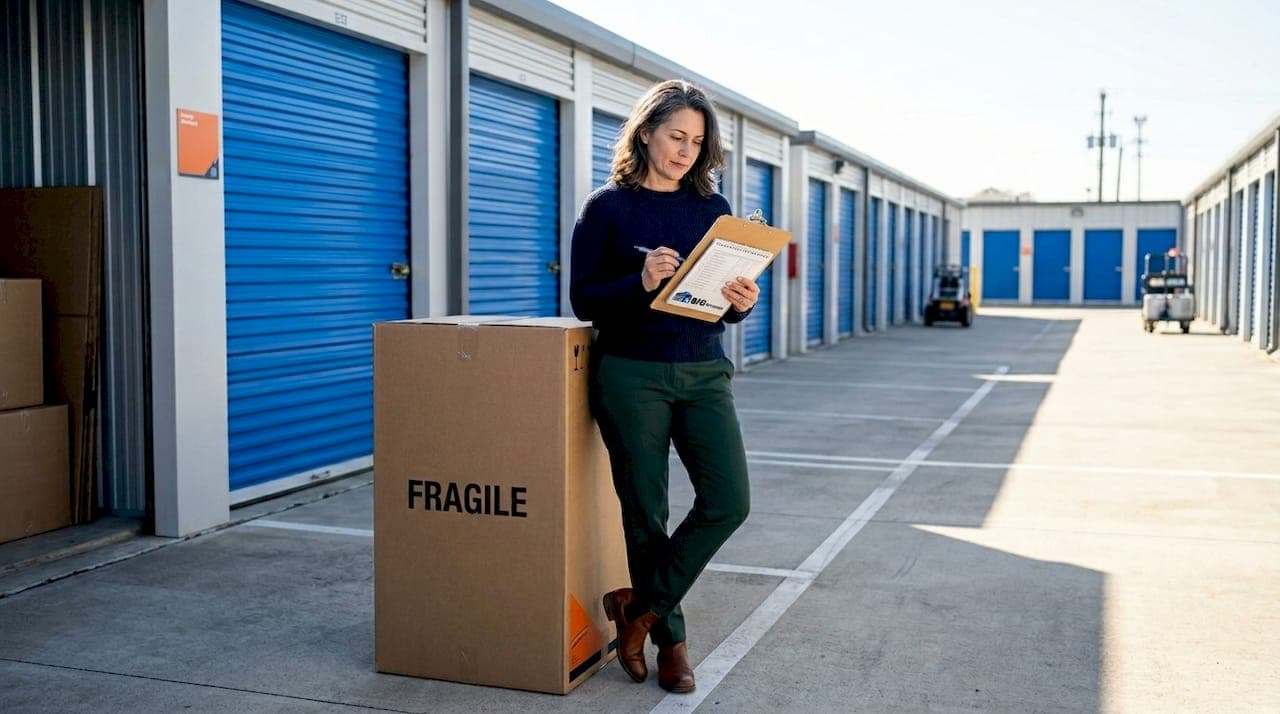
A storage unit rental checklist is the single most effective tool for avoiding costly mistakes when renting self-storage for the first time. Without one, renters routinely choose the wrong unit size, overlook insurance gaps, or pack prohibited items that void their lease. This guide walks you through every step: sizing your unit, evaluating security, reading your lease, and packing smart. Rentbigstorage facilities across Mississippi offer the unit variety, security features, and flexible terms that make this checklist easy to apply in the real world.
1. Your storage unit rental checklist starts with knowing what you're storing
Before you compare facilities or prices, catalog every item you plan to store. Write down large furniture pieces, appliance dimensions, and the number of boxes you expect to fill. This step sounds obvious, but most first-time renters skip it and end up paying for a unit that's either too large or too cramped to use efficiently.
Group your inventory into categories: furniture, boxes, seasonal items, and fragile goods. This grouping tells you whether you need shelving space, floor space, or climate-controlled conditions. It also gives you a concrete list to reference when speaking with facility staff, which speeds up the reservation process considerably.
2. How to choose the right unit size
Storage unit sizes range from 5'x5' to 10'x30', and matching your inventory volume to the right unit prevents both wasted money and physical damage from overpacking. A 5'x5' unit holds the equivalent of a large closet. A 10'x10' fits a one-bedroom apartment. A 10'x20' or larger accommodates a full household move.
| Unit size | Typical contents |
|---|---|
| 5'x5' | Seasonal items, boxes, small furniture |
| 5'x10' | Studio apartment contents, bikes, mattress |
| 10'x10' | One-bedroom apartment, appliances |
| 10'x20' | Two to three-bedroom home contents |
| 10'x30' | Full household move, vehicles, large furniture |
Use the table above as a starting reference, then adjust based on how densely you plan to pack. Drive-up units in Ocean Springs at Rentbigstorage, for example, offer multiple size options so you can step up or down without switching facilities.
Pro Tip: Place items you'll need to access frequently near the front of the unit, and stack heavy boxes on the floor. This prevents crushing fragile goods and saves you from unloading the entire unit every time you need one box.
3. Standard vs. climate-controlled units
Climate control is not a luxury for everyone. It's a requirement if you're storing wood furniture, electronics, artwork, vinyl records, photographs, or clothing for longer than a few weeks. Humidity and temperature swings warp wood, corrode metal contacts, and cause mold on fabric. Standard drive-up units work well for metal tools, plastic bins, and non-sensitive household goods.
The cost difference between standard and climate-controlled units is real, but so is the cost of replacing a warped antique dresser or a water-damaged document collection. If you're storing anything with sentimental or high monetary value, climate control is the right call. Pascagoula units at Rentbigstorage include climate-controlled options specifically designed for sensitive items.
4. Security features to verify before signing
Security features and insurance serve completely different functions. Gated access and surveillance cameras reduce theft risk but do not protect against fire or water damage. That distinction matters enormously when you're deciding what coverage to purchase.
Before you sign a lease, confirm the following security features are in place:
- Gated access with a personal PIN or key fob
- 24-hour surveillance cameras covering all entry points and aisles
- On-site lighting throughout the facility, including interior hallways
- Individual unit alarms that trigger on unauthorized entry
- Disc locks rather than standard padlocks (disc locks resist bolt cutters)
Rentbigstorage facilities on Pass Road in Gulfport include gated access, surveillance, and lighting as standard features. Verify these specifics at any facility you consider, not just the ones you find online.
Pro Tip: Before move-in, photograph every item individually with a timestamp. A dated photo inventory significantly strengthens insurance claims and speeds reimbursement if you ever need to file one.
5. Insurance: what your policy actually covers
Most storage facilities require proof of insurance, but homeowners and renters policies often have strict limits on stored possessions. GEICO advises confirming your existing policy's off-premises coverage before assuming you're protected. Many standard policies cap stored-item coverage at 10% of your total personal property limit, which may fall far short of your unit's actual contents.
If your existing policy doesn't cover the full value of what you're storing, purchase supplemental storage insurance. Many facilities offer it at the point of rental for a modest monthly fee. Rentbigstorage provides tenant protection options that give renters a straightforward way to close coverage gaps without shopping for a separate policy.
6. Understanding your lease before you sign
Storage lease agreements typically require valid ID, proof of insurance, and sometimes a background check. Monthly payments are standard, and most facilities charge late fees if payment isn't received within a grace period of five to ten days. Auto-pay enrollment usually waives those fees entirely and is worth setting up on day one.
Read the notice period clause carefully. Most facilities require 10 to 30 days' written notice before you vacate. Missing this window can result in an extra month's charge even if your unit is empty. Also check whether the facility reserves the right to raise your rate with notice, and how much notice they're required to give you.
Key lease terms to confirm in writing:
- Notice period required to vacate (typically 10 to 30 days)
- Rate increase policy and required notice period
- Late fee structure and grace period length
- Auto-pay discount or enrollment terms
- Access hours and whether 24-hour access is available
7. Month-to-month vs. long-term rental terms
Month-to-month self-storage rentals renew every 30 days, which makes them ideal for moves, renovations, or transitional life situations where your timeline is uncertain. Long-term contracts often run six to twelve months and come with promotional pricing in exchange for the commitment.
Renters staying longer than three months can often negotiate prepay discounts or rate-lock options. This means you get month-to-month flexibility on paper while locking in a lower rate by paying ahead. Ask about this option directly. Facilities don't always advertise it, but most will offer it when asked. Rentbigstorage's Vancleave location offers flexible terms worth discussing with staff when you reserve.
8. What items are prohibited in storage units
Hazardous materials including gasoline, propane, motor oil, paint, and explosives are universally banned in self-storage units. The reason is fire risk: a single improperly sealed container of flammable liquid in a shared facility puts every renter's belongings at risk. Food and organic materials are equally prohibited because they attract pests that spread to neighboring units.
Treat the prohibited-items list as a mandatory filter before you load the truck. Violations can void your lease immediately and expose you to liability for any damage caused. Run through this checklist before packing:
- Flammable liquids (gasoline, paint thinner, propane)
- Toxic chemicals (pesticides, cleaning solvents, pool chemicals)
- Food, perishables, or anything with organic residue
- Firearms, ammunition, or explosives
- Live plants or animals
- Stolen or illegal goods of any kind
Pro Tip: If you're storing a lawnmower or generator, drain the fuel tank completely before loading it. Even a small amount of residual gasoline qualifies as a prohibited flammable.
9. How to pack your unit efficiently
Disassemble furniture, use sturdy boxes, breathable covers for upholstery, and label all boxes on at least two sides to pack efficiently and protect your belongings. Breathable fabric covers prevent moisture buildup on sofas and mattresses. Plastic wrap traps humidity and causes mold, so avoid it on fabric items.
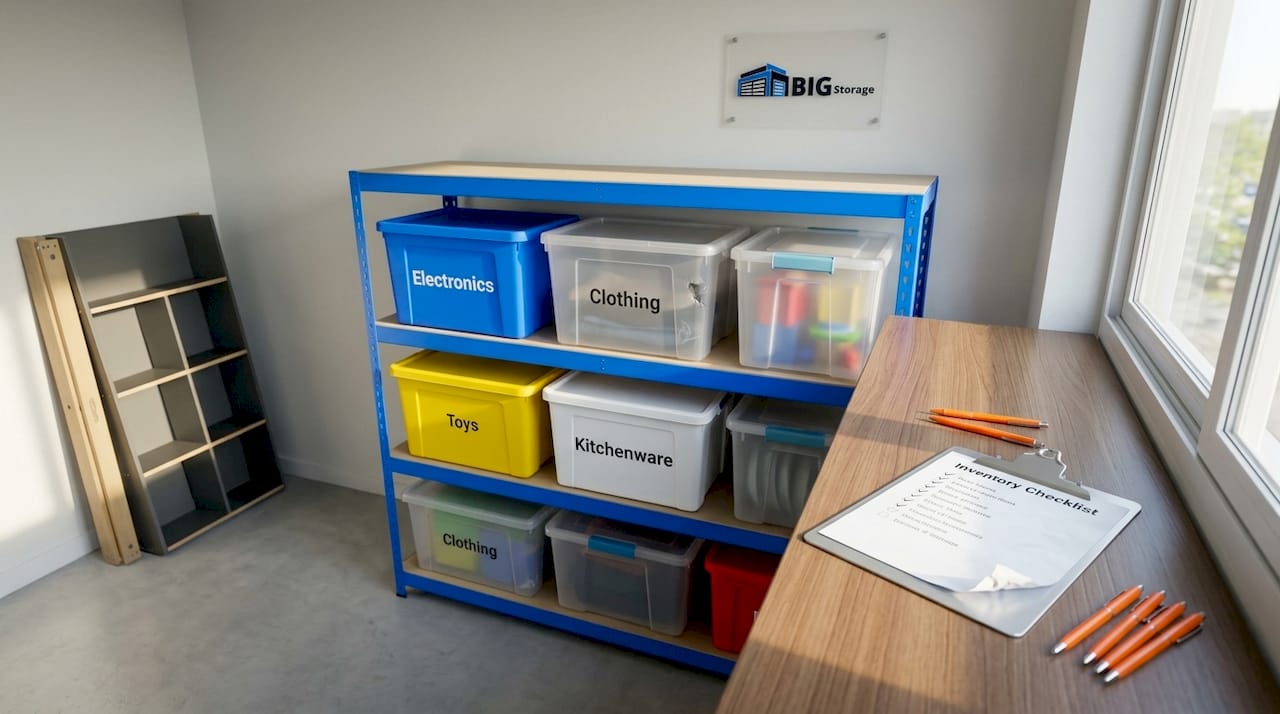
Stack boxes with the heaviest at the bottom and the lightest on top. Leave a center aisle so you can reach items at the back without moving everything. Create a simple hand-drawn map of your unit layout and keep it with your lease documents. When you need one specific box six months from now, that map saves you an hour of searching.
Label every box on two sides minimum, with the room of origin and a brief contents description. "Kitchen: pots and pans" beats "Box 14" every time. For fragile items, add a second label on the top face of the box so it's visible when stacked.
Key takeaways
A successful storage rental requires matching unit size to inventory, separating security from insurance, and filtering prohibited items before you load the truck.
| Point | Details |
|---|---|
| Size your unit accurately | Measure items and use a size chart before reserving to avoid overpaying or overpacking. |
| Security and insurance are separate | Cameras prevent theft; insurance covers fire and water damage. You need both. |
| Read the lease notice period | Missing the vacate notice window costs you an extra month's rent. |
| Filter prohibited items first | Check the banned-items list before loading to protect your lease and your neighbors. |
| Document everything before move-in | Dated photos of all items speed insurance claims and keep you organized. |
What I've learned after watching renters get this wrong
I've seen the same mistakes repeat across hundreds of storage rentals. The most expensive one is skipping the insurance review. Renters assume their homeowners policy covers everything in the unit, sign the lease, and discover the hard way that their policy caps off-premises coverage at a fraction of what they stored. That gap costs real money.
The second mistake is choosing a unit by price alone without verifying access hours. A facility that closes at 6 p.m. is useless if you work until 7. Confirm that the facility's access hours match your actual schedule before you commit.
The third mistake is packing without a map or inventory. Six months in, you need one specific document or one specific tool. Without a labeled map, you're unloading half the unit to find it. Fifteen minutes of planning at move-in saves hours of frustration later.
My honest recommendation: use a printed checklist on the day you move in. Walk through each item physically. Don't rely on memory. Facilities like Rentbigstorage make the process straightforward with staff who will answer questions directly, but no staff member can substitute for your own preparation. The checklist is yours to own.
— James
Find the right unit at a Rentbigstorage location near you
Rentbigstorage offers drive-up units, climate-controlled options, and flexible month-to-month terms across multiple Mississippi locations, including Gulfport, Ocean Springs, Pascagoula, and Vancleave. Every facility includes gated access, 24-hour surveillance, and on-site lighting as standard. Online reservation and payment make the move-in process fast, and staff are available to help you match your inventory to the right unit size.
Whether you're storing a single room's worth of furniture or an entire household, find a location near you and reserve your unit online today. Rentbigstorage also offers tenant protection plans so you can close insurance gaps at the same time you sign your lease.
FAQ
What should be on a storage unit rental checklist?
A storage unit rental checklist should cover unit size selection, security feature verification, insurance confirmation, lease term review, prohibited items screening, and a packing plan with labeled boxes and a unit map.
How do I know what size storage unit I need?
Measure your large furniture and estimate your box count, then match that volume to a standard size chart. A 10'x10' unit fits a one-bedroom apartment; a 10'x20' fits a two to three-bedroom home.
Does my homeowners insurance cover a storage unit?
Homeowners policies often have limited coverage for stored possessions, typically capping off-premises items at 10% of your total personal property limit. Confirm your policy details and purchase supplemental coverage if needed.
What items are not allowed in a storage unit?
Flammable liquids, toxic chemicals, food, live animals, and weapons are universally prohibited. Violations can void your lease immediately.
Is month-to-month storage better than a long-term contract?
Month-to-month storage is better when your timeline is uncertain. If you plan to stay longer than three months, ask about prepay discounts or rate-lock options, which give you flexibility while reducing your monthly cost.